
I’m not in the habit of touring the good ol’ US of A. However, the truth is that New Orleans is one of those fabulously historical places to visit, where Scarlett O’Hara might step out of the trolley car behind you at any moment. If you stick around long enough – during Mardi Gras, she certainly will.

The French quarter is the tourists haven. It is ablaze with kitschy knick-knacks you never knew you needed until you set eyes on them. Each new street is lined with kitchen supply stores, vintage shops and galleries, lots and lots of galleries stocked with classically regional, Southern Art.
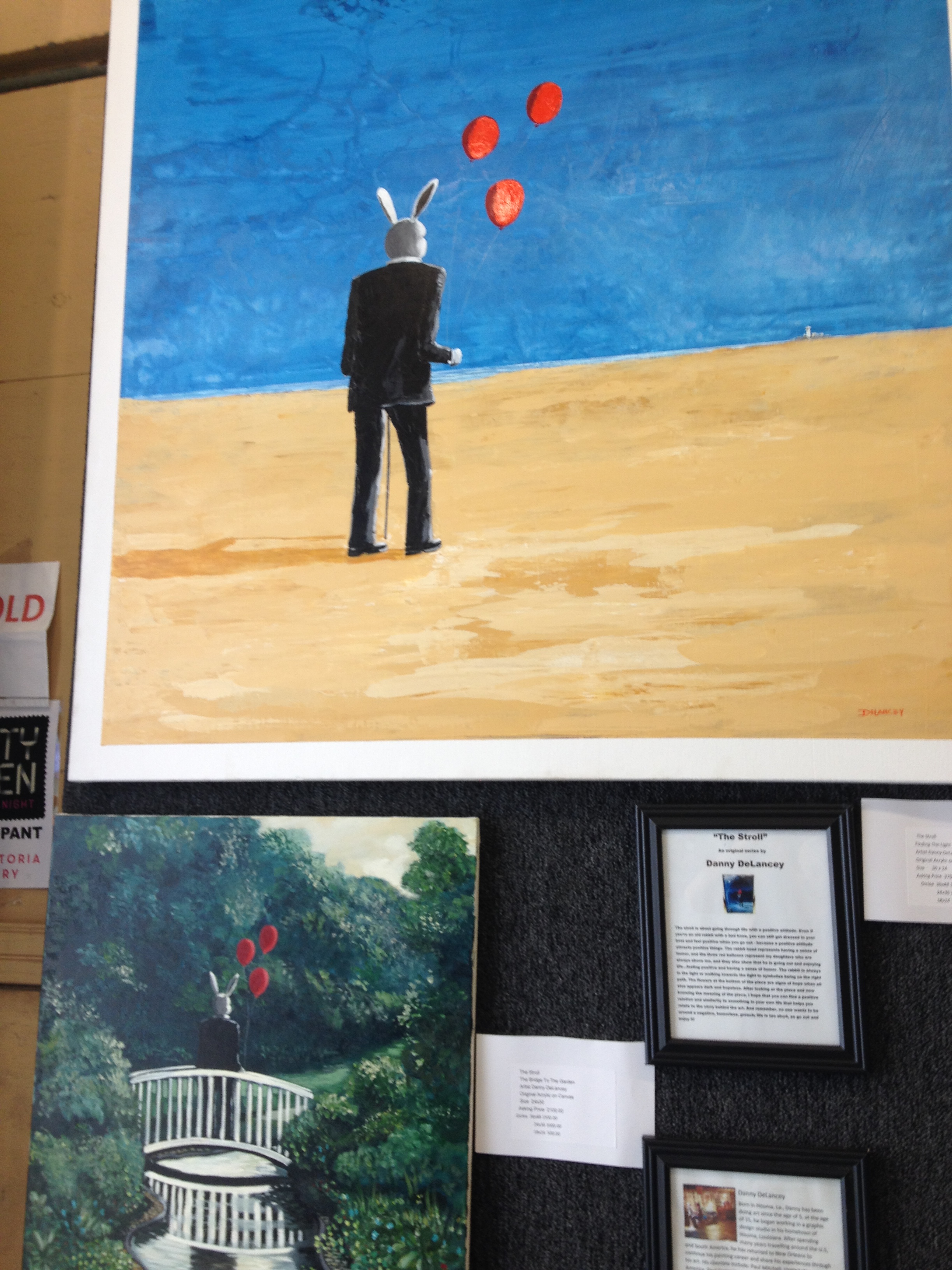
The Stroll by Danny DeLancy
Defined by its romanticism within landscapes, this genre tends to engender the realistic and the mystic in one. Southern art presents the artist’s cultivated and reverent vision of his/her/their home. Though too gaudy for my personal walls, (apparently there is such a thing) there is plenty of fun to be had in chatting up the vending artists as they hassle the passersby. You never know which artist will turn out to run a fortune telling business on the side and will read your palm for the price of being mentioned in your blog…..
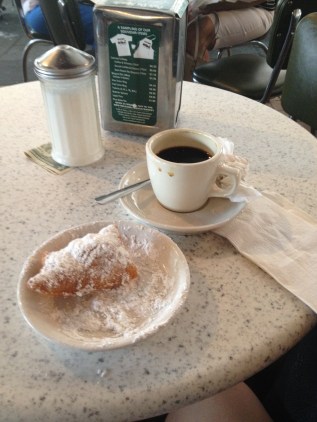
Admittedly dubious of the beignets and cafe au laits from Cafe Du Monte, I shall concede that they are better than anticipated, considering the touristic hype surrounding them. Despite the interminable wait for service, I suggest that you swipe a table and take time to ruminate over your quarter pound of powdered sugar at your leisure. It can be a pleasant break from the balmy 95 ° F and 75% humidity in NOLA .
While airboat tours do not guarantee Huck Finn sightings, they do offer a quick trip out of the city, past idealistic manor houses and out into the famed bayous. A bit more pricey than the regular swamp tour, you will pay for the core -vibrating experience of skimming across wave crests at fifty mile per hour if you take an airboat tour. I suggest that you pre-plan a bit more than I did. Short skirts and tank tops don’t leave much to your fellow passengers imaginations when dealing with strong winds. (It should also be noted that tours in the rain will leave you with raindrop bruises, so watch the weather report too…)

Of the extensive bayou network you’ll enter, over 10,000 brackish canals long, not a single canal is naturally occurring. Dug-out in the 1900 – 1950s these beautiful backwaters were initially created by logging companies when they were clear-cutting old growth bald cypress. Today algae blooms, grandfather’s bead (tree moss) and crocodiles live in a unique ecosystem which comprise 40% of U.S. wetlands. There is not a single old growth bald cypress in the state, though second and third growth trees can be found aplenty.
As we skimmed along the canal surfaces I noted PVC pipes at each majorintersection. Natural gas pipelines are buried less than 4 feet below the water’s surface throughout LA’s bayou network. Unfortunately, the ramifications of a minor leak in one pipe in this complex ecosystem seemed less distressing to my fellow passengers than the vivaciously yellow banana spider, (not poisonous unless squeezed) which had found its way aboard and spent too much time exploring my shoulders and birds nest bun.
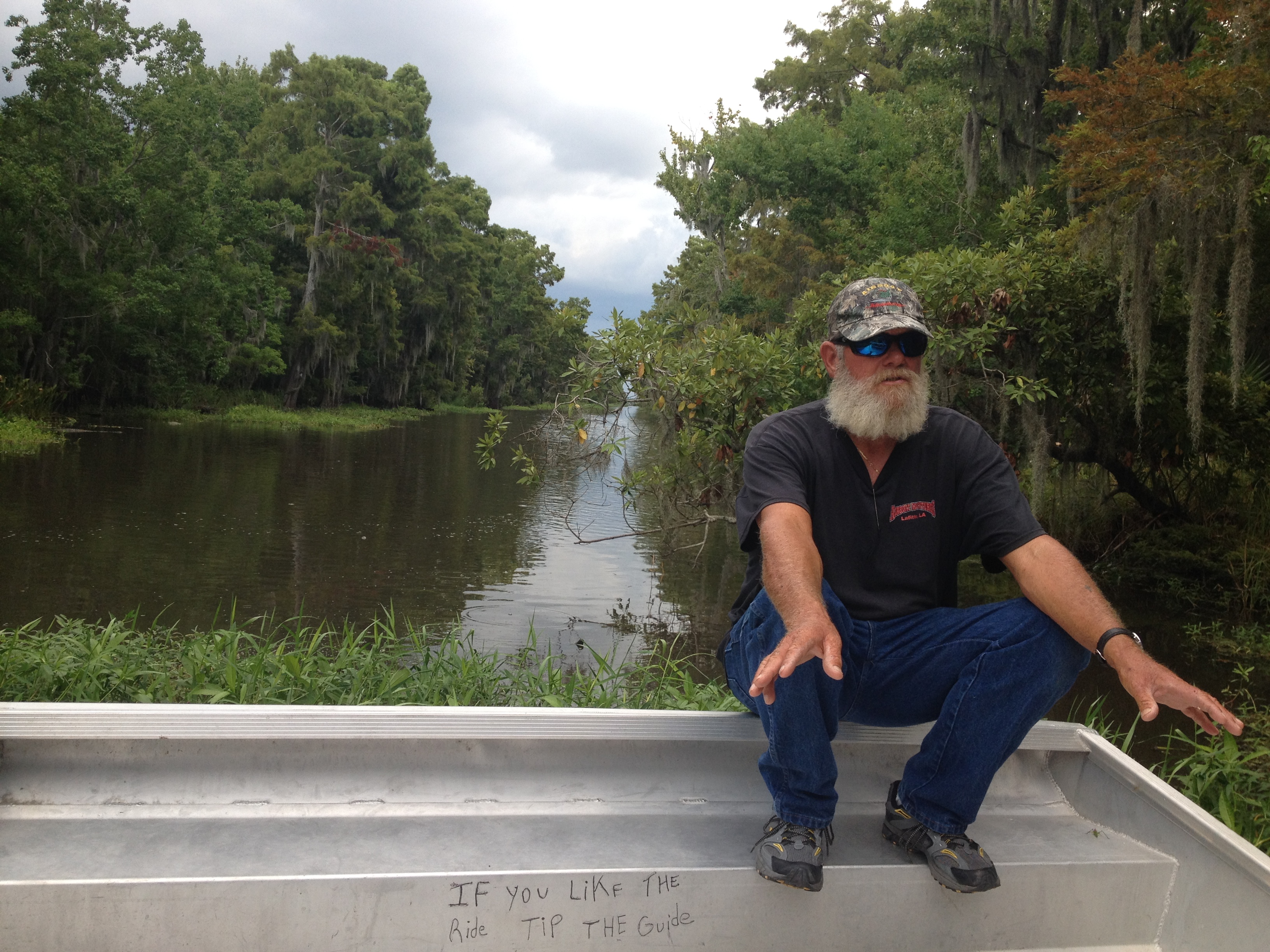
Sam, our swamp guide was knowledgeable about crocodiles, bayou life and politics. He informed us that he loves kissing crocodiles after giving them swamp crack, (marshmallows) but he makes sure to give them all female names prior to kissing them. He encouraged us to name the crocodile as we wanted when we were given an opportunity for a kiss of our own. “I’m not trying to make a statement, but I’m not one to judge which way you like…” he claimed and honestly the “croc probably don’t care neither”.

FYI- It takes six full size crocs to make one small purse for fashionistas.
Like most cities, NOLA has some grandiose Chelsea-inspired galleries on the south side of town for the wealthy collectors. Just west of that there are some additional public museums for everyone else. I managed to squeeze in the Ogden Museum (modern, local and contemporary art), the ConfederateMuseum (oldest Museum in LA, it’s been open since 1891) and the WWII Museum This was a fitting place for me to explore in August I felt. I paid homage to my grandfather who was active in the war and to the victims of the Nagasaki and Hiroshima bombings, which took place 69 years ago to the day of my museum visit.

Gone With The Wind theme aside – There is another NOLA which the debaucherous tourists and men in dresses (Red Dress Run ) might fail to grasp or choose to overlook. This was a slave town historically. Prior to the Civil War, over 100,000 human transactions took place in pens lining the Baronne and Gravier streets (two main streets lined with hotels today). Of those families who were broken up and sold, nearly one-third of the sales were of children under 13.

Dawid and entrepreneur
Today the city’s population is still over 40% black, but if you stay in the French Quarter the entire time you would never know it. The epic partying by fraternity brothers and bachelorette parties distracts from the disturbing issue that the tourist money being poured into the city only reaches so far, it seems and that the few homeless people I did see in the tourist areas were not white. On an early morning walk my first day in the city I watched two inebriated homeless men, self-stated veterans, rounded up and relocated to another part of the city as a part of what I assume is a routine clearing of the streets….
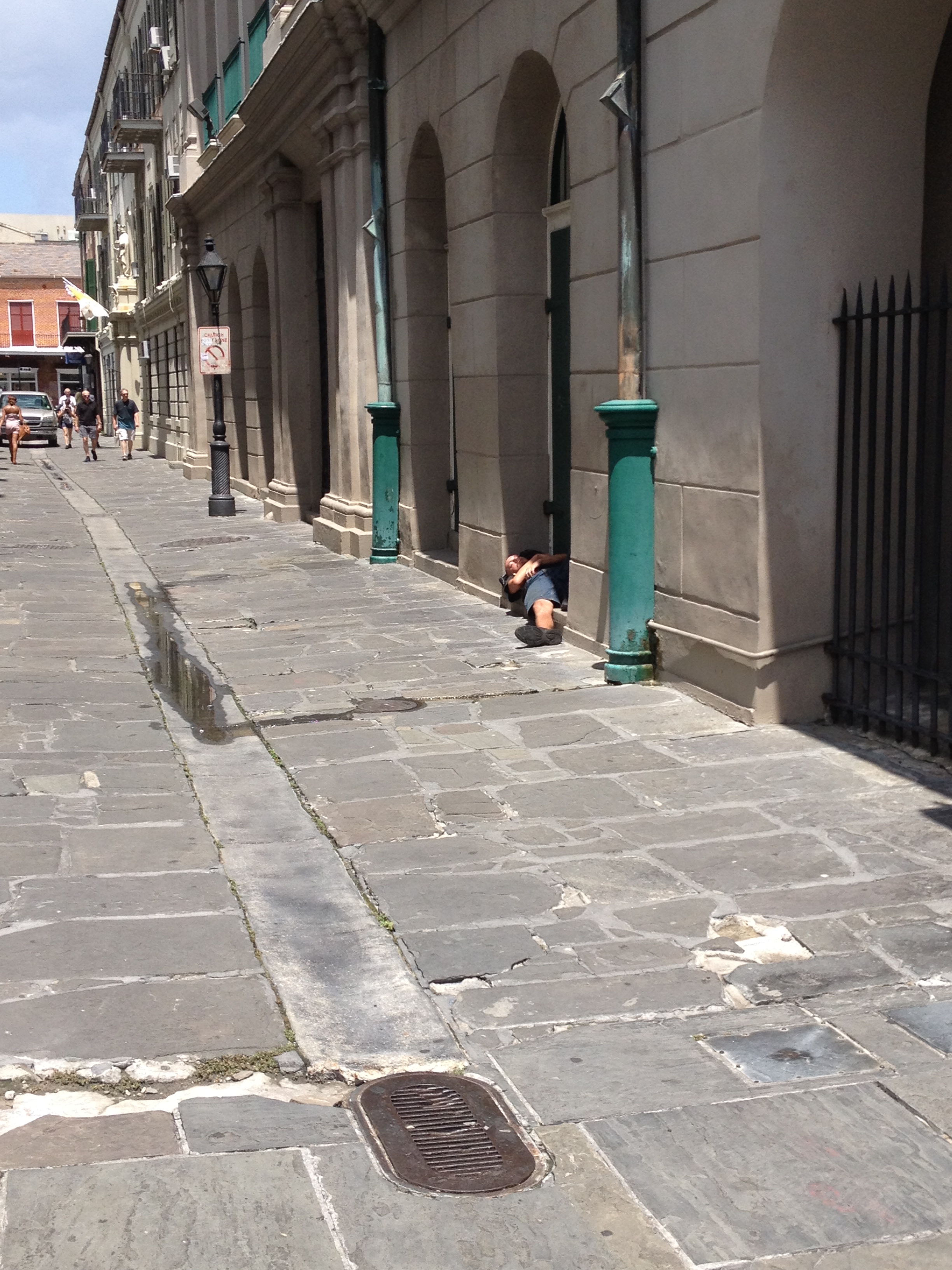
I am certainly guilty of brushing past people asking for money on the streets. I certainly ignored an “entrepreneur” who kindly offered to hook me up with my dreams for the night, for a small fee of course. I “White Girl Dance” shamelessly with my hands in the air and I stride with confidence when I travel. I am secure in my opinions and myself, having growing up in thesheltered south of the USA. Yet today, nine years after Hurricane Katrina devastated the city, studies show that only 30% of lower income families, the majority black, have returned to their homes as compared to 90% in more affluent, white areas. #checkyourprivilege

The hurricane changed the city’s landscape and its perception of itself permanently. The city has been rebuilt in many places. The levees have been repaired and strengthened. This brilliant, voodoo prevalent city, which glorifies itself with iconoclastic images of true jazz and blues ripping apart the night certainly manages to ingratiate itself to tourists. Yet, as I departed for the airport in a shared shuttle, (Lyft, Uber and taxicabs are all a minimum of $40 for the trip) I found myself wondering what other great potential the city could have in its future, someday when Mammy and neutral zones* are no longer such participants in society.

 intrepid trekking