London, England 6


When traveling to London for the first time it is important to hit all of the historic sites of the city.
That is why I walked the London Bridge at Midnight, directly after my arrival in the city. And not 6 hours later found myself crossing the Millennium Bridge to get to the Tate Modern (which is free, like all British Museums and currently featuring POP- dadaism, surrealism and pop art in general). One of my favorite new pieces was “Alice in Wonderland”  were the viewer had to clamber about 15-20 ft pieces of furniture. It is a baffling experience exploring everyday objects such as a kitchen table and chairs from a new lower perspective.

At the National Gallery I saw Michelangelo’s “The Entombment”, Holbein’s “The Ambassadors” Vermeer’s “Young Woman at a Window” and so much more, including many Renoir, Monet and VanGogh. Due to rain I ended up at the British Museum, viewing the Rosetta Stone,  figurines from the Parthenon, mummies and entombment clothing, a Hispanic Revolution exhibit and the oldest clock in the world. My travel companion, continually noted that everything was “just like in his textbook pictures!” Funny thing that…
Big Ben has a rather quiet ring for all the hype, standing on the Westminster bridge waiting to hear it ring at twenty meters away Icould only just discern it’s bells over the traffic. The Tube is an incredibly effective mode of transit. The automated voice reminding me to “mind that gap” is still reverberating in my head. Double decker buses on the other hand push thought the streets at reckless speed, but as I never once saw an accident I must assume that the British have a method to their madness.


Fear not dear readers: I am not through with my adventures yet. After watching the changing of the guard at Buckingham palace. I at lunch under the great monument at Trafalgar square. I climbed the London Fire Memorial to see the entire city from above and I traveled into Shakespeare’s Globe and the National Theater for the afternoon.
 In order to hit up the West End Theatre I acquired tickets to La Cage Aux Follies, The birdcage. The second night I went to a show called Mrs. Klein. As soon as I entered a voice called over the house-announcer: “all rise for her majesty”, I shot out of my seat so fast I almost fell over the balcony. The Queen was attending the same show as me! She is a patron of the theater and always attends opening nights. Judging by the back of her head I dub her to be charming with a very elegant wave and purposeful way of sitting down, dainty but controlled. She also had a great hat green with a partial face veil and two feathers sticking out of the top, very English.
The show itself was incredible. Directed by Thea Sharrock, (the same woman who directed Equus at the West End and then for Broadway, As you Like It at the Globe, etc) it was a show which had so much internal struggle that I was blown away by the subtlety of the acting. Having seen numerous shows in my life I have never been as impressed or emotionally invested as I was as this tine. Perhaps viewing a show with royalty near me skewed my vision, but I would like to believe that the British really got this right. This was realistic theater at its best, it was story-telling which demanded catharsis from the audience, just as any good theatre ought to.

Not to leave out Cinema while on my London-Arts-Kick I went to see the opening of The Imaginarium of Doctor Parnassus (Heath Ledger’s last movie, with roles shared by Johnny Depp, Jude Law and Colin Ferral). It was a Terry Guilman film, enough said. To make it a double feature I also watched An Education, I will admit I believe Mona Lisa Smile got a better message through to the audience. But as a devout Emma Thompson fan, have nothing more to say than that.
For my final day in London I attempted to go out to Stone Henge. Two hours out on the train I found out that it is a 30 quid taxi ride to the stones themselves. Since that was not feasable (low budget traveling) I turned around and toured Charles Dickens’s childhood home and writing studio. The space was dark, dreary, and dank. Even the aging of the carefully preserved quills he used to write with were gloomy and droopy. Following such depression I allowed my young new acquaintance, Eddie to guide me on a library hunt in the city. Together we saw the King’s Cross Library and three other inner-city branches “ooing”and “ahhing” in unison over the brilliant fundraiser ideas each branch used and over each collection.
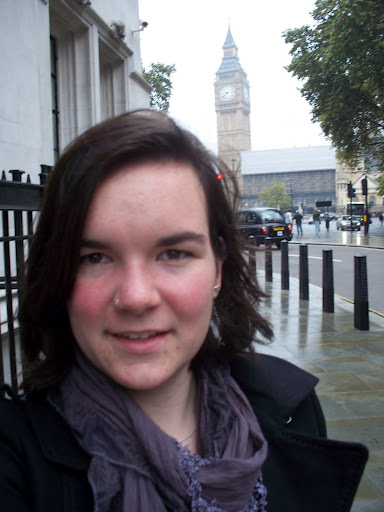
Then it was over, far too quickly. I hit the highlights. I saw the queen. But can one really write down all the interesting people, beautiful places and fascinating moments that one has? Suffice to say I had a wet and touristic time in the historic city of the English.
Ireland, Dublin 5


Howya!
I was shocked to hear English upon my arrival to Dublin. I have become accustomed to foreign languages swirling about me. To be able to speak the country language? What a concept. It is amazing how much easier it is to be confident when you know the customs and how to be polite.
Dublin was wide awake when I bused myself into the city at about 2AM. On my way to a hostel I stopped in a pub, The Stages Head for directions and was awarded with a free of Guinness to welcome me to Dublin. It turned out that The Merry Rovers, a particularly fine band were playing at the pub. Some locals helped me step through a few line dances and taught me the counts necessary for Irish jigs. By dawn I found myself leaning heavily on a table talking to lovely elderly chaps about “the Irish” as a people.

I extracted a few wonderful local secrets: Did you know that the Liffey River which runs down the center of the city is not water, but is actually Guinness? The dark brown water is actually all ale, they push it down the river so that it is naturally well churned. It is this process that gives it the massive head that it has.
Or there are the “Doors of Dublin”- the real reason that all of the doors are painted bright colours is because of the women, tired of their husbands never making it home from the pub at night (because they were too drunk to recognize their own house number) the women began painting the doors; A man can recognize his own bright yellow door on the street even from far away.
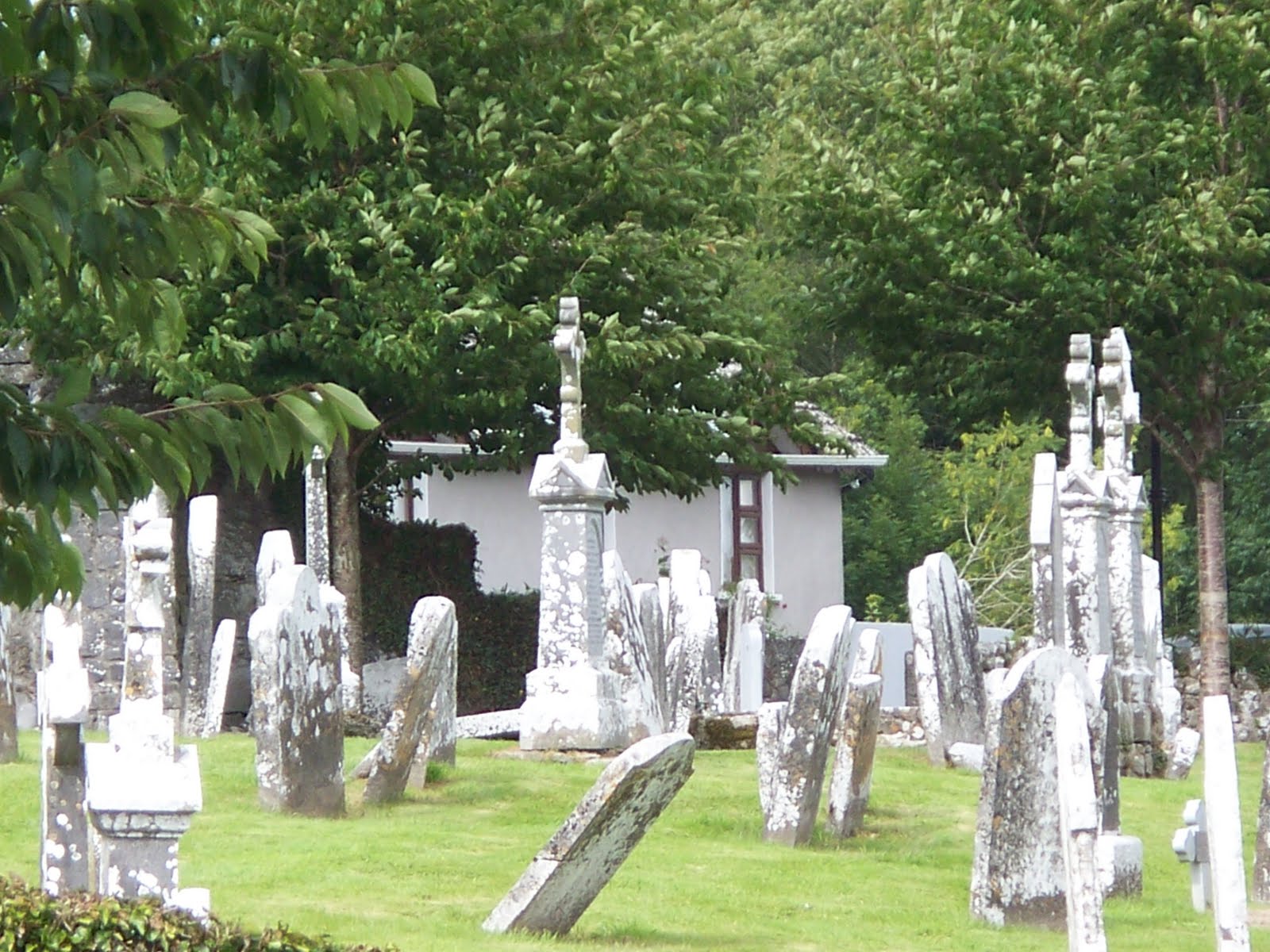
Saturday my green wellies and I toured the Jameson factory, Macon’s Church (the oldest Church in Ireland) and all of the Crypts below it. That evening I went to see “Tales of Ballycumer” at the Abby Theater.
It was an amazing show. The script won awards at the Edinburgh Fringe Festival a few years ago, and it was here by public request. The set was beautiful and simplistic… a slopping stage covered in flowers, with a chimney in the center around which most of the action took place. The play was smoothly executed, and the fact that this troupe of actors (all union) and this whole performance venue was able to funded by the government made the experience that much better. Avante Gaurde theater. It exists for a reason: Theater is singular, it can lead out of the general of the world. We need theater…
Come evening I found myself once again wandering the streets of Dublin. On a street corner near waiting for a bus I met a black-haired, blue eyed man Rorey.After brief conversation he determined it would be best if he showed me the best night sights of the city himself: the Oscar Wilde Memorial, the Temple Bar, the Palace Roof. As we traversed the night around us was lively, every street filled with live music, a mix of traditional Irish jigs, American Classics, and European Techno.
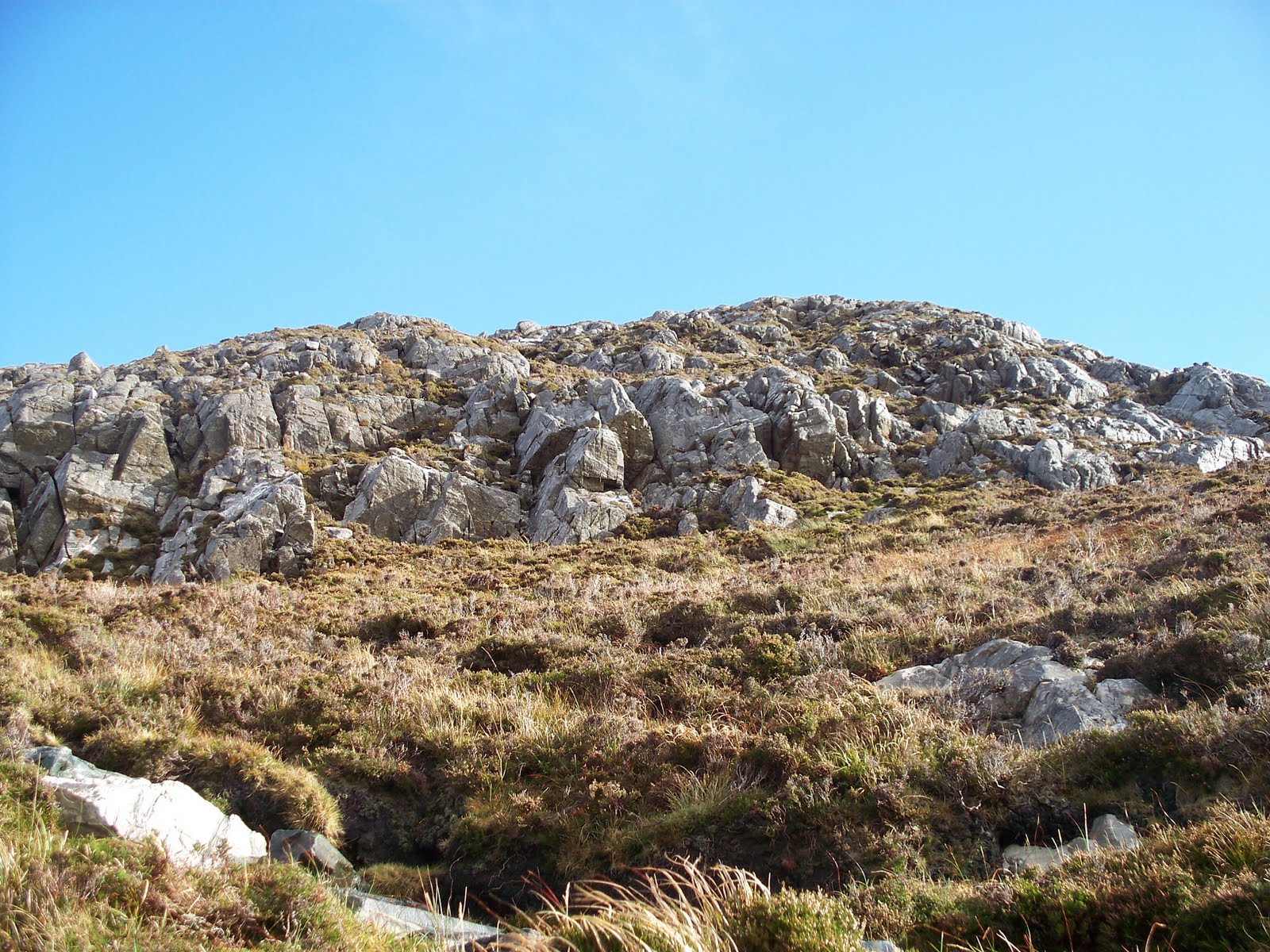
On Sunday morning I hopped a 44 bus out to the Wicklow hills. I passed through the Glencree valley and up into Sally Gap aka the gardens of Ireland  where P.S. I love You or Brave Heart these movies were shot .I hopped off the bus at the summit of the hill and spent the afternoon fighting gales of wind as I traversed my way down the mountainside to Glendalough. Here I toured the ruins of a monastic settlement, splashing about in the puddles and marveling at the four rainbows which continuously occurred simultaneously in the sky. Later after grabbing dinner at a nearby pub ( dinner for vegetarians means a huge platter of chips, with my Guinness) I watched the football game with the locals. (I am supporting liverpool, in case anyone wants to know). That evening I stayed in a little hostel just outside of the town, meant for backpackers who are walking across the Irish hills.

Monday I boarded a tour bus with a local I met at the hostel, Terry.( He is an elderly fellow who needed to return to the city for the day.) He accompanied me acting as my personal guide by informing me along the way about all of the historic sights which we were passing including The Vale of Avoca, where Thomas Moore is buried and Vally Kisangel, the driest city in all of Ireland, (meaning there is no pub there).

I made some friends on this journey. But the most important thing is: I found a home. This is the land I want to live in. And I know that I will get back there someday.

Paris, France


France. Paris to be precise.
There was so much that happened, perhaps I will simply make a list in the hopes that you, my readers will begin to understand. The Eiffel Tower, 1652 steps to the top; in all honesty I only climbed up 876 of those steps. I viewed the Moulin Rouge from the outside, then walked over to the Pantheon and watched the city life, while eating passion fruit gelato from the buildings steps.

Some of the most tempting and beautiful things I found in Paris are the gardens: Jardin du Luxemburg, Jardin du Tuileries, Camp de Mars. The city is interspersed with expansive patches of lush green, perfectly manicured pieces of nature. Yet one cannot walk in them. They are eye candy only, each tailored branch, each genetically tamed flower, each crisp stem of grass a feast of natural splendor. For most drinking in the smell of freshly watered sod and running a hand over the roughness of the cast iron fence’s spikes would be enough of a reminder that these are forbidden lands. I desire to jump the fence and frolic in the grass, to dance at the feet of Zeus,  to run before Diana and her hounds who stand guard over that earth.

Pere Lachaise is Paris’ garden for the dead. Although it was not opened until 1804, today it is the largest cemetery in Paris. I traverse the paths searching for the graves of Oscar Wilde, Jim Morrison, Moliere, and La Fontaine who rest along with the infamous, the famous, and the unknown of French history. The property is expansive, upwards of 300,000 tombs, and is divided up into lanes and divisions. Even with my cemetery map, purchased for two euros at the entrance chapel, I wander for hours, up and down the chestnut covered pathways, circling the tombs I hope to visit. 
Sneaking into the center of lane 73, division 6, I find that many mausoleums have caved in, iron doors hang from a single hinge, shattered stained glass windows leave faceless virgins, unbalanced crosses and incomplete geometric patterns glowing in the sun. Other tombs show signs of remembrance, silk roses, unsoiled by dirt and rain, flutter in the wind. Freshly scrubbed headstones reflect sunlight up towards the chestnut trees lining the main pathways.             
Offerings of love letters left in hopes of acknowledgement and chiseled messages adorn famous graves; I leave my own lipstick impression on the cold marble of Wilde’s grave, offering my admiration for literary and artistic endeavors alongside the thousands who have professed their love before me. Monuments erected in honor of individuals and war memorials embellish the remaining space of the graveyard creating layers as they stack up upon each other. All decorated with marble statues, bronze moldings, and granite architecture glorify human life; every piece is a work of beauty.


 There is also The Louvre! I could live there. I have decided that resting my head next to Diana’s hound, or simply laying myself prostrate along the floorboards in front of Vermeer’s self-portrait, any of Renoir’s art…
For the sun festival I contra-danced with a Frenchman just outside of Notre Dame. And later sat along the Seine River eating baguettes and cheese. My companions and I  drank red wine on park benches until the wee hours of the morning. Later while still intoxicated we searched out the Catacombs of the city, only to find them closed due to vandalism… While this was a setback in our plans we found  gigantic 2 euro crepes from a grumpy vendor and were able to consume nutella, bananas sugar and cinnamon by the mouthful. Although not an alternative for historical landmarks, the food was much more appealing to our student palates.
 As a final note: For anyone who was wondering yes, my travel buddy and I had our own Amelie moment… cramming into a photo booth, taking the aweful photos then throwing one away, our own movie set in Paris.

Praha, 4

Praha, Prague. It was a wonderful trip overall, even if it did rain two of the three days I was there. (That’s why I am a firm believer in Wellington boots.)
I stepped off the Euro-Train and onto a deserted, crumbling concrete platform. There was nothing about me to signify location, except possibly the faded graffiti on the walls. I placed my right foot in front of my left; sometimes curiosity requires trekking ignorantly forwards. The Czech Republic I recently learned has only been established as a country and republic since  1993 when it split from Slovakia. Before that time it was controlled by a Communist Militia Party, and before that it was under the control of the Nazi’s. (Recommended reading: The Unbearable Lightness of Being) For the majority of travelers Prague is the first ex-communist country that they will visit. Coincidentally it is also the first ex-communist country to be included into the European Union.

The city is laid out in a maze of perpendicular alleys. Every corner of the city is permeated with the odor of oil-fried dough and the overly sticky sweetness of sugarcane. Even the medieval sizzling of venison over open fires in the Old Town Hall only satiates the begging of the stomach temporarily against such constant enticements. Overheard the faded plaster buildings and corroding granite town houses are adorned by musky limestone lintels and weather- beaten gargoyles. The majority of the buildings wears a facade of graffiti, luring the eye to the slightly pitched R’s and downward spikes of the Z’s criss-crossing street sayings. The additions of spray paint on Romanesque art fuses the gap between archaic history and the not-so-distant past.
The city’s iconic destinations, the Karluv Most (Charles Bridge) and the Zahrada Na Valech (St Vitus Cathedral) dominate the skyline. Planned for magnificence the burgundy sea of roofs peter off into sloping deciduous forests and puce colored vineyards along the base of the Castle’s megalithic stairs. Navigating the bridge entails zigzagging about the throngs of desperate artisans. Each one emphatically and boisterously defending his personal Czech art, while at the same time forcing replicas of replicas into the unwary tourist’s hand.
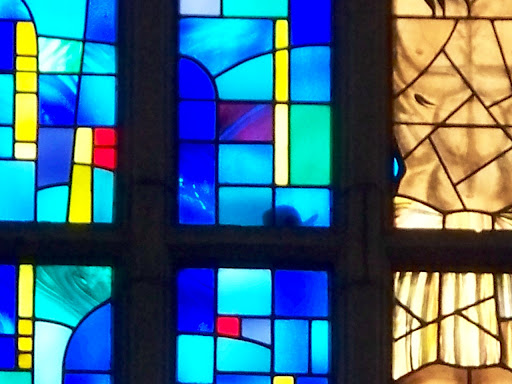
 However, once inside the cathedral reverberating music transcends all other distractions. Organ music resounds, glorified by the arching fanned-vaults of the ceiling, echoing across images of heaven and God’s eye, then back down to my ear. Here a dance of centuries takes place; the old and the new, as the overlapping of art deco stained glass, (the replacement windows for those shattered during Nazi occupation) crosses into the fifteenth century, simplistic lead moldings. Proper form and progressive function co-exist on top of this imperial city.

My own adventures inside this city included seeing the Czech Philharmonic (a dynamic lesson on the importance of cacophony and syncopation as beauty). I danced my way through all five stories of Karlovy Lázně and the underground tunnels of Vinarna U Sadu. i climbed the highest watch tower in the city at minimal fee, finishing the last steps on all fours, and traveled city to a cathedral made entirely 60,000 human skeletons all collected from the time of the Bubonic Plague
Upon leaving on a 15 hour night train I met Louise and his father Louise from Argentina.These two men and I were shocked to meet Michael, an elderly German who predicted that Germany’s rise to power would come again and soon. Michael was my first encounter with open hostility to Americans. I spent the first few hours of broken conversation defending my country, but as he continued to talk I learned to simply listen. This was a foreign way of thinking, but it is still another point of view on my country. As a traveler/student I want to absorb all world opinions that I can. Perhaps when I am back stateside this information I have amassed will encourage broader thinking in my views…
(The fact that Obama won the Nobel Prize yesterday morning does not help my standing as a United States Citizen. I have been thrice offered insincere congratulations  in less that twenty-four hours.)

Barcelona, 3


Hola!
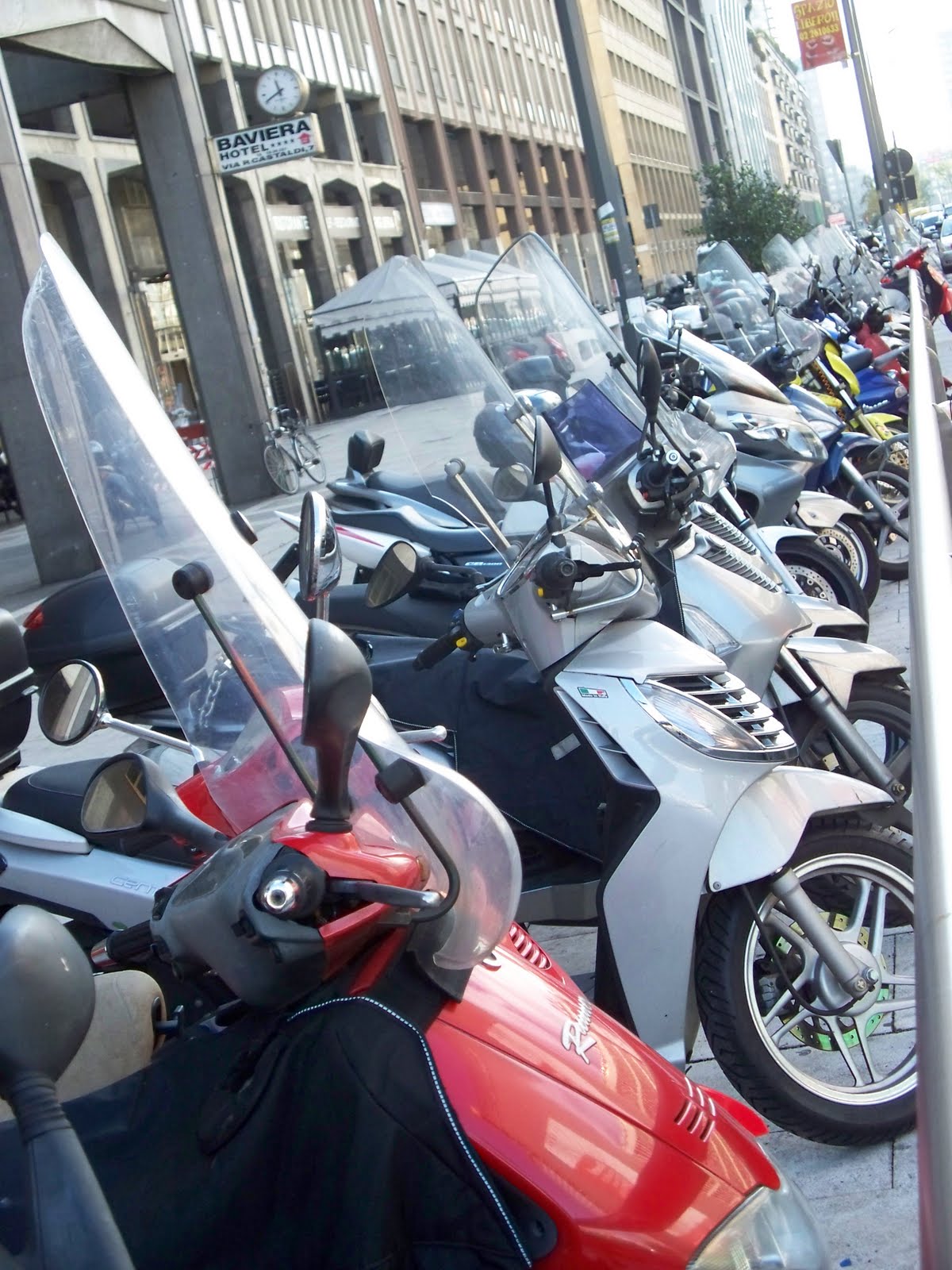
As a student traveling it is always better to enter a city from the back, undetected, thereby allowing oneself a true view of the city, rather than viewing the city’s façade, which it wears for tourists. So too is it with Barcelona: upon stepping off the bus the sidewalk fails to lead into a square of ancient villas, houses with red terra-cotta shingled roofs and decaying, white plaster walls as one may expect. Instead the city looms overhead, the touristic is ideal replaced with pastel colored condominiums stacked endlessly atop each other. Here there are no visible policia to regulate renegade Vespas, and rows of abandoned bikes lie, coated like the air about them in a layer of exhaust so thick that it has hardened into something tangible. The first steps off the bus are an education, not a welcome to utopia.

With a population over 1.4 million the city is well capitalized. While traversing inwards from the city’s bus station the town seems to dwell ahead. Underfoot the gray pathway guides the passerby with a continually changing floral, geometric or cobblestone motif, saving the asphalt only for the highways. It is the small details, such as the Spanish crown atop the cast iron street lamps and the strategically placed Gaudi designs which usher the traveler into the city center also known as the  “gothic district”. Here the Sagrada Familia, The Fundacion Foto Colectionia and the National Art Gallery of Catalunya dominate the horizon, dwarfing (by zoning ordinance) the city’s tallest skyscrapers with their foreboding and aerodynamic architecture and musty smell of worn granite.
If one continues to pace down the narrow cobblestone walkways, eventually the monumental buildings come to an end. Near the landing of the 1992 Olypics the cobblestone lay pass away into unadorned wooden boardwalk. At the end of the peninsula is where the course golden sand and saltwater breeze hide, away from the crammed confusion of the city. This is a regular site for meditation, chanting circles, street concerts and nude tanning on the beach.
If you are like me may find yourself enchanted by the city, thereby ending up in such places as: The Ice Bar, waiting in line and paying to sit somewhere that is -20 farinheight while drinking/eating from ice glasses. Or  walking into a Flamanco/Opera concert in a Gaudi concert house where such passion and love of the culture are displayed that I find myself unabashed proud of their country and history as performers are.


  On Sunday morning I got up with the sun and sneaked into the Barcelona Cathederal to attend a mass with 35 nuns. Following this I found myself meditating on the beach, with  Yalan, a young man who accompanied   me over the East Town rocks. We did the sun salutaion together and I learned my first guitar chords from him. He is a Shi’it from Iraq who fled to Espania.

All of the things that compose a full trip, but even with these wonders it is strangely relieving to return Home to the Dutch again. The last moments of this trip, spent dancing to terrible 90’s/industrial mixes on the Eurorail at midnight before finally returning to Well’s small neighborhood in the dead of night finds it’s wends it’s way into my memory just as easily as getting sunburned within an inch of my life watching the Red Bull Mini-Plane-Racing contests…

So many stories that go with a thousand moments.

Amstel-Dam, 2


Amsterdam is a city which derives half its name from the Amstel River it rests on. The other half is linked to the great Dam at the capital’s city center, not surprisingly, one of the oldest commercial landmarks of the country. When unloading from the cramped bus, within seconds the delicate chiming of bicycle bells rings out to greet the gathering mass of milling travelers.  Amsterdamers traverse about the city at rapid speeds on their banana seat bikes. Jumping out of the way, a fellow bus rider curses and learns the first valuable lesson of this city: bikes do not stop for pedestrians. 
The city spread flows out of the hostel-yard awaiting exploration. Immediately noticeable is the sound of water lapping sleepily against restraining walls, it catches the ears the moment one is outside; noticeable too is the subtle scent of musty water, the perpetual perfume of the city. By scouting out the main road and carefully stepping onto the gray cobblestone-fanned pathways, the first of the four canals comes into view.  Water flows serenely under an arched granite bridge and continues down the long lane of monochromatic buildings. Instead of forging ahead as many would be want to do, the travel guide suggests that the group pause at the center of the bridge to gaze enthralled at the white gables on each house. Adequate compliments of admiration regarding the different shades of gray in the towering brick facades, but narrow width of the Dutch houses are bestowed. Our walk is delayed longer as person after person puffs their way up uneven marble steps to pose under a red lintel-arms spread eagle against the edges of the building for a Kodak moment. The secret to this style of architecture is of course, that Amsterdamers are taxed based on the width of their buildings; therefore is no other solution but to build up. (Thus also allowing for great wealth to be readily apparent.) For further historical relevancy the guide informs us that the outermost canal, (upon which we are currently gawking) is the newest canal in the city, built in the 1800’s. The specific bas-relief sculptures decorating each threshold of the slightly slopping buildings indeed tell of by gone eras. They speak of  prosperity and luxury individually defined in each building’s family crest.

Continuing on to the city center the cobblestones give way to well-laid dusty-red bricks, leaving a clearly defined and paved red bike path. Crossing the third canal means walking into the 1700’s architecturally. While this bridge is still made of granite and iron, it features Quetzalcoatl rails. The fact that we are spanning centuries is palpable as we pace forward barely 100 meters and land over the second canal, and stylistically into the 1600’s. Images of modern-day life juxtapose the architecture about us: smart cars parallel park beside the canal edge and sleek ducks squat on top of moored  paddling boats as flat touristic boats glide about the canals. 
 The innermost bridge leads across the oldest canal in the city and then the 1500’s spring into view. Here street performers and shops line the quickly widening lane. One hundred elephant statues, all painted in symbolic designs and Andy Warhol imitations line the main street, the Rokin. A posted sign placard informs the curious that these artistic mammals are a statement of artistic interest and city wide support for the dwindling numbers toward the preservation of these mammoths.
 Finally there is Dam square. All roads in the city lead to Dam Square, it is the cities heart and pride. The great palace turned town hall sits imposingly to the North end of the square. It rests in all its splendor of bronze bells, and terra cotta lintels, tall and grandiose  under a constant barrage of camera flashes. The presence of metal scaffolding just serves as a reminder that this is a functioning city, one in which people live and work, not one designed purely for the pleasure of gawking travelers.  Wandering about the open square Dolce and Gabana ads and neon traffic lights serve as eye candy, adding to the smell of excitement which perfumes the central air. At the South side of the square the sandstone memorial for World War II stands. The monument inherently draws the viewer closer to it. Containing a bit of each from every country that was embroiled in World War II, the sculptures faces are intrinsically haunting and respect-jerking. Reposing on the steps of this grand memorial is one of the best resting spot in the city,  a place to put down one’s bag and perhaps snack on some good frites.  It is a good place to end a walking tour and to simply absorb a bit of Amsterdam culture through diffusion.

Kasteel Well, Netherlands 1.0

Hello Everyone!
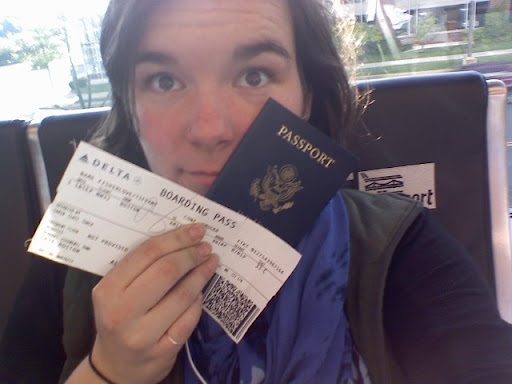
I am creating this blog as a record of my travel activities. This will begin with my arrival in Europe for the  first time and hopefully progress from there as I move onto bigger/numerous adventures.


  Limburg, the town of Well to the Kasteelean 20. I am extremely excited and relieved to be here!

The grounds are incredible; I am located just off the main passageway (or brick corridor) looking out over the inner moat of the castle. I am also located directly across from the bell tower, which though lovely, does continue to chime bells all through the night.

The castle is from the 14th century. It has a double moat, winding turrets and amazing fields of corn, blueberries and rose bushes next to it. It is a most picturesque place. There are black swans which swim in the moat, two horses who live just across the Voetpad (footpath) from the castle and everyone in the town of Well owns bikes instead of cars.
The town itself is composed of one restaurant, one butcher shop, one grocery store and one Inn. None of these places are open after 17:00 or open on weekends. I can already tell that the life-pace here will take some adjusting to. But I do not believe it will be a bad thing.