It is amazing how you can be homesick without ever knowing it. Then one day you come home and a tsunami of belonging hits like an eddy of brick walls. It is the small things upon arriving that make the difference: While on the Adirondack from Penn Station to Montreal the Canadian Customs officers simply take a courtesy glance at most passengers passports and wave them past. I am certain that my return trip will not merit such ease of passage. When climbing the escalator into the Gare Central The Depanneur catches my eye, a Spar in the middle of the Sahara. I creep towards the check out counter, willing my eyes upwards until I am directly in front of the clerk. I glance down, a riot of color brazes my eyes-Dark Chocolate Kit-kats, Bounty bars, Yorkies, and Areo’s splay across the narrow shelves. The brilliance of the foreign brands strikes me with nostalgia not for the treats, but for the people who support such variety.
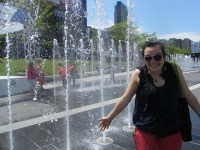
The Island of Montreal is the smallest big city you will ever explore. Filled with government funded support for the arts and a Canadian’s love of music Montreal holds more music festivals in one summer than most Mid-West US cities do in a year. Every Sunday the Festival Electronique takes place on Parc Jean-Drapeau on Ite Sainte-Helene and hundreds of people dance the techno nod under the “L’homme”. In the Place des Artes Frances Follies takes place on the square, celebrating French musicians in live performance while locals recline on the green hillsides drinking Molsen, (equivalent to Canadian Budweiser), and watching children or adorable couples play in the dancing fountains of the plaza. Having noted all this, it is also important to enter such small yet expansive cities with preparedness. Finding yourself hovering under the main rotunda without money, mobile, internet or any idea of how to contact your friends can leave one feeling distinctly idiotic, particularly when the situation has the dulcet tone of familiarity to it.
In such cases it is pertinent that you do not panic, do not sprint for the nearest SORTIE sign. Despite its friendly, neon-red letters this sign is not a Hitchhiker’s sign sent to assist the dim traveler. Rather stay seated in one place and have faith that your friends understand how under-prepared you always are. Therefore they will rescue you and march you home to a luxury apartment on the fifth floor, which is not a walk-up.
Seventy percent of the city’s office space is underground in the complex tunnel system known as the RESO. Here a second city is glorified out of cement extending the Latin Quarter, China town and capitalistic for miles in a limelight special of carefully selected high end boutiques and capitalistic temptations. Above ground the downtown of this clean city stands in the shadow of Mount Royal. While not an epic feat of exercise this is a must-climb of the city. It is an adventure which involves dehydration, sunburn and thick humidity at 0,700am on a summer morning. (As a personal recommendation I suggest leaving your hosts in bed for a well deserved break from you.) Spend some quality time scrambling up recently soaked pathways, past the smoking tree, probably struck by lightning in last night’s heat storm and finally crest the pinnacle where any nature withdrawal you may have been feeling dissipates while your labored breathing eases. To the South-Montreal extends out, floating in the last morning fog; to the North smaller settlements stem out of sight, but just beyond the horizon your imagination is boggled by the immensity of the Northern wilderness and possibilities living within it.
 The Musee d’arte contemporain de Montreal has one of the largest donated modern art collections in the world, 47% was donated in the last 10 years. It is also free on Wednesday evenings and large enough that you do not need to worry about beating the crowds to see the mirror works by Rober Racine or Louise Bourgeois’ The Red Room. Deja, the current collection on display is a wonderful inundation of Canadian pride and beliefs. Deja-a French word translated as “already” allows the art to focus on achievements that have already taken place. However, the collection also plays with the idea of deja vu, future things being recreated in pleasurable ways, thereby giving them familiarity, but also allowing memories to blossom. (www.macm.org) Personally the double projections of Shirin Neshat really hit home for me and judging by the reactions about me, for any woman who has ever felt isolated from society or herself.
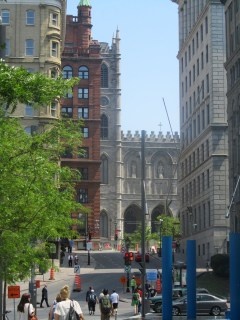
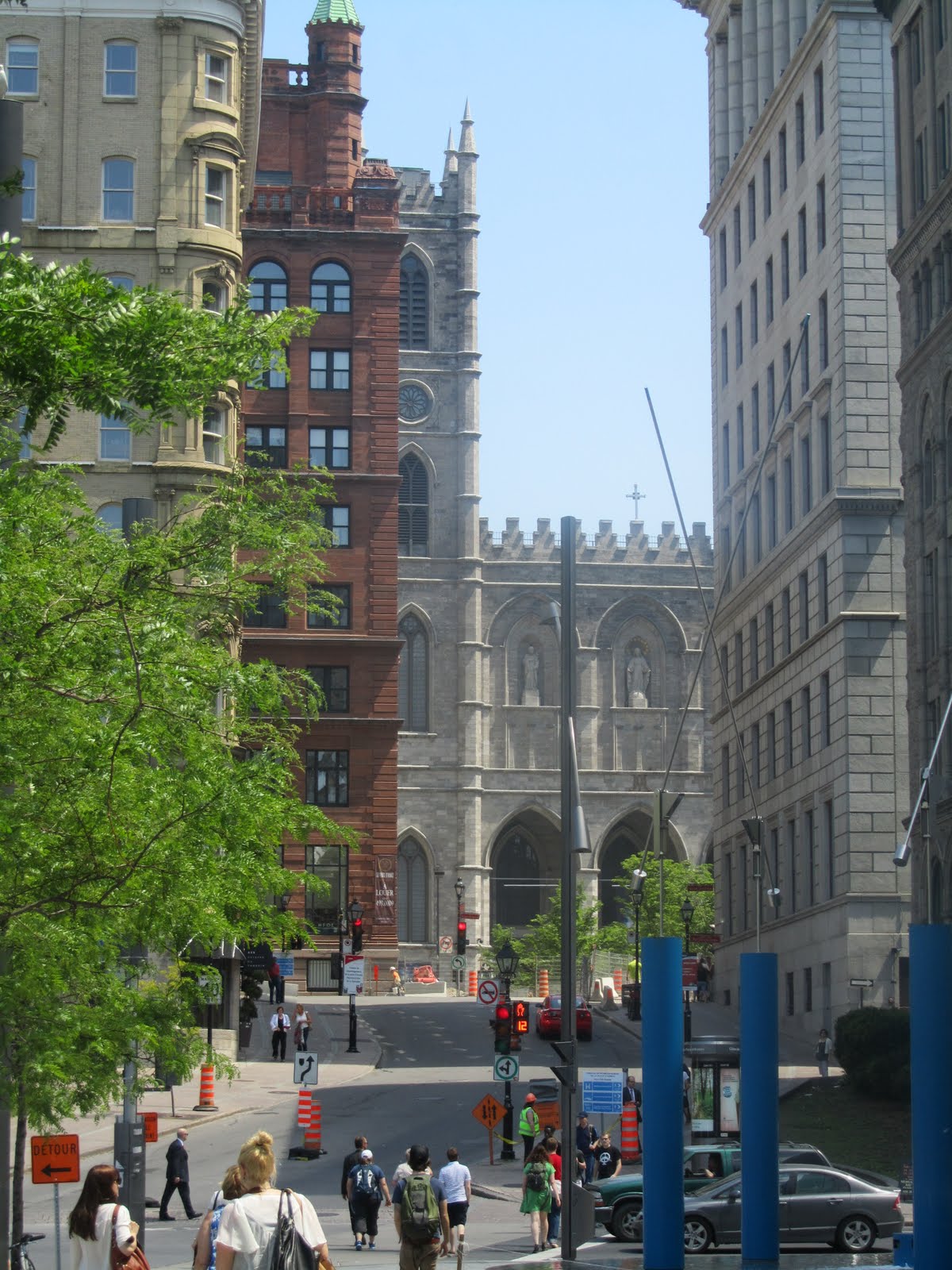
The biosphere from Expo ’67 is still located on Parc Jean-Drapeau on Ite Sainte-Helene, and it is only a 5,50e metro ride away. Designed by Richard Buckminster Fuller it is not technically a full biosphere as part of the structure bends into the ground, and is no longer covered as the outer panels burned away in 1976. Upon approach to the structure such knowledge seems trivial, this is the biggest and most exciting jungle gym you will ever behold. It even rivals the high flying turrets of Notre-Dame Basillica of Montreal. Built in 1824-29 this church uses gothic revival and modern architecture to set it apart from the Parisian Notre-Dame.

Today the church is no longer used for masses, but instead acts a gateway in to Old Montreal and the Rue de Artes. Perhaps the most European district in the Northern hemisphere this quaint area is lined with terraces for outdoor meals. The streets are cobbled and stately men astride angry horses pose strategically between glowing fountains of Venus’ and flowering waterspouts. On a clear day you can see across the Fleuve Sainte-Laurent which isolates Montreal all the way to Lle Notre-Dame. If you are traveling on a low budget and are easily distracted by shiny objects this is the place for you. The Rue de Artes (Street of Artists) runs perpendicular to the heart of old Montreal. In here you will find signature Canadian jewelry made of crushed aluminum and dycroic shimmering dycroic glass. Or impossibly adorable trinkets from: hand painted birdhouses including signs that read “cheap rent” or “jailbirds” to video demonstrations assisting you in the proper etiquette and fit of a Cabana Hat (AKA Bucket Hats).
If you want a vacation go somewhere natural, original and culturally French,but without the attitude!

 The Musee d’arte contemporain de Montreal has one of the largest donated modern art collections in the world, 47% was donated in the last 10 years. It is also free on Wednesday evenings and large enough that you do not need to worry about beating the crowds to see the mirror works by Rober Racine or Louise Bourgeois’ The Red Room. Deja, the current collection on display is a wonderful inundation of Canadian pride and beliefs. Deja-a French word translated as “already” allows the art to focus on achievements that have already taken place. However, the collection also plays with the idea of deja vu, future things being recreated in pleasurable ways, thereby giving them familiarity, but also allowing memories to blossom. (www.macm.org) Personally the double projections of Shirin Neshat really hit home for me and judging by the reactions about me, for any woman who has ever felt isolated from society or herself.
 intrepid trekking